What Will the NFL and IT Be Like In the Year 2020?

Hi.  I’m Dave Manks, Director of Product Marketing for Numara Software (Now BMC) 

As I gear up for SuperBowl XLVI this Sunday to watch my favorite team, the NY/NJ Giants (Yes I’m from NJ,) I am having a ball keeping up with all of the coverage, hype, speculation and prognostication.  During my media frenzy, I came across an interesting article on what will the NFL be like in the year 2020.

That got me wondering, being in the high tech market and a tech geek, what would IT be like in the year 2020?  Not that I am any kind of a visionary when it comes to predicting the technology market but it’s certainly fun and interesting to think about. 

The first future concept that came to mind was the whole idea of consumerization.  That term will likely be worn out within a few years and a distant memory by 2020 (we can only hope) and we will all be going on about our day using our 3.2 devices. 

I expect to see that data and applications will be transparent in the Cloud and follow us based on what we are doing, what device we need to use at that particular point and where we are.  I love the notion that whatever I am doing at the time or regardless of where I am, my “experience” can follow me and even switch to a different device seamlessly.  

Along the same lines, what will be the changes for applications?   Applications have already radically changed.  Kids today think that all software costs 99 cents and is available within five seconds of download.  However, in the future, I foresee corporate and personal apps co-mingling and presented as available based on your location and need.  In short, the apps will appear when you need them on the right device.  It’s hard to imagine that kids today that use tablets and smart phones so effortless (and on them all the time) will all be in the workplace and have that same level of expectation for IT with the need for immediate access to information.

One interesting area that the future of football article discussed was how social media and video will be used.  They even had a Twitter station set up at the recent Pro Bowl to allow for the players to tweet from the sidelines and discuss what was happening during the game, what they were doing and how they felt.   How will social media be used and expanded with IT in the year 2020? 

Look at all of the ways that we are using social media with IT even now and in the next coming years.  We will access and follow our IT department getting immediate updates on any relevant systems, IT news or network information using FaceBook, Twitter, SalesForce.com Chatter or maybe an internal company feed or “Wall”.   What a great way for companies to engage employees, enhance communication across the organization and better align IT to the business.
 
Will we have even more immediate access to this information in the year 2020?  I can see us getting video texts and messages from our IT department or maybe even information tickers that we are following going across the bottom of our devices and phones. 
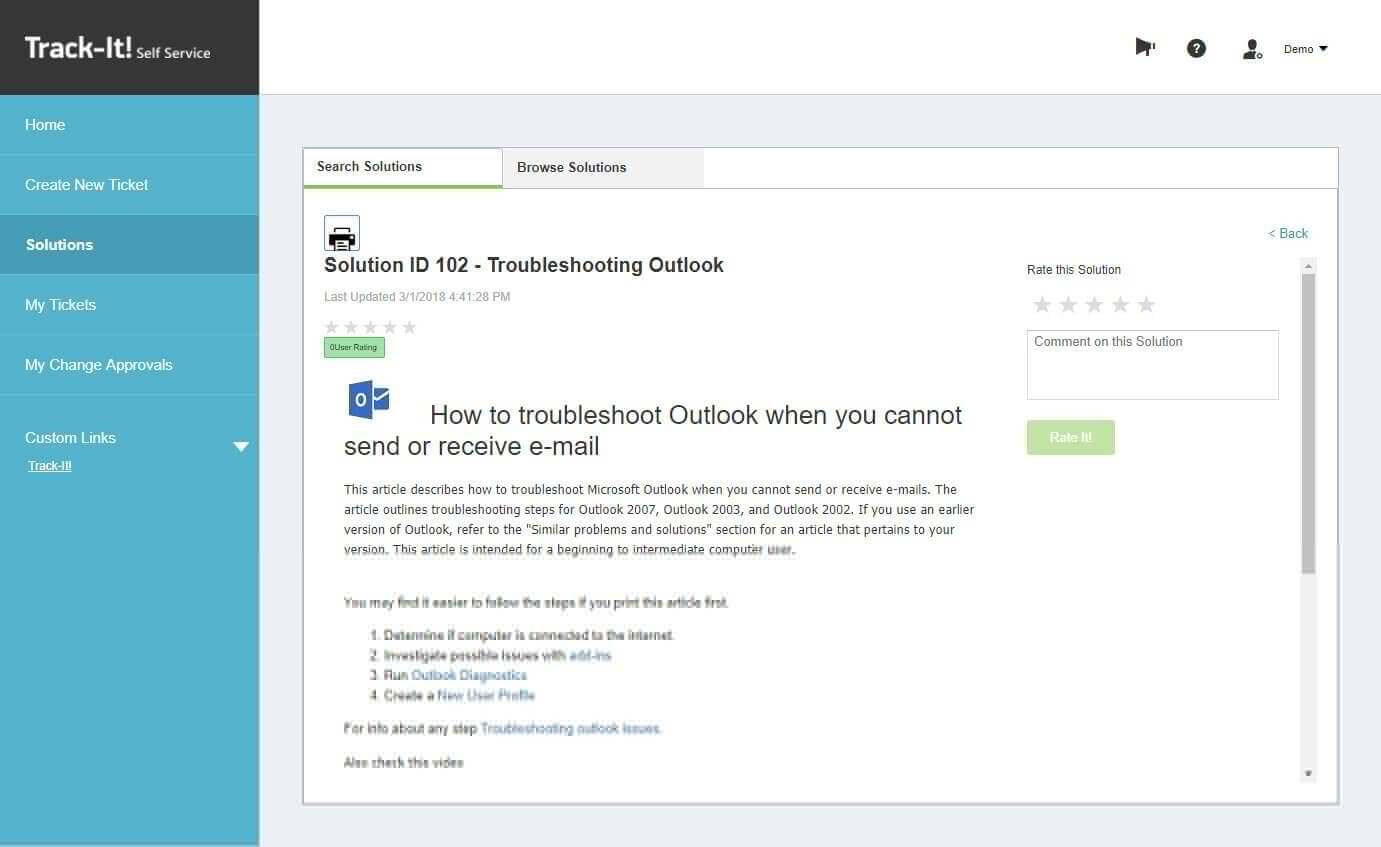
Self service will be at a whole new level putting more information than ever before at the fingertips of employees and customers.  These new users will know what they want and they will want it now. 
   
One of the recent technology enhancements to the NFL on tv that moved the entire game to a whole new level was the simple yellow line projected across the field that allowed the viewer to better visualize where the first down marker was.  It was simple change that instantly made the game of football so much easier to follow.  It was near genius as it brought more fans to the game, which increased viewership and then revenue all driven by Business Intelligence (BI). 

This simple yellow line allowed for a visualization of the goal which in turn is exactly what IT is looking to achieve.  BI will be such an important area over the next decade. Improving visibility will only serve to facilitate communication among employees, executives and the greater organization.   

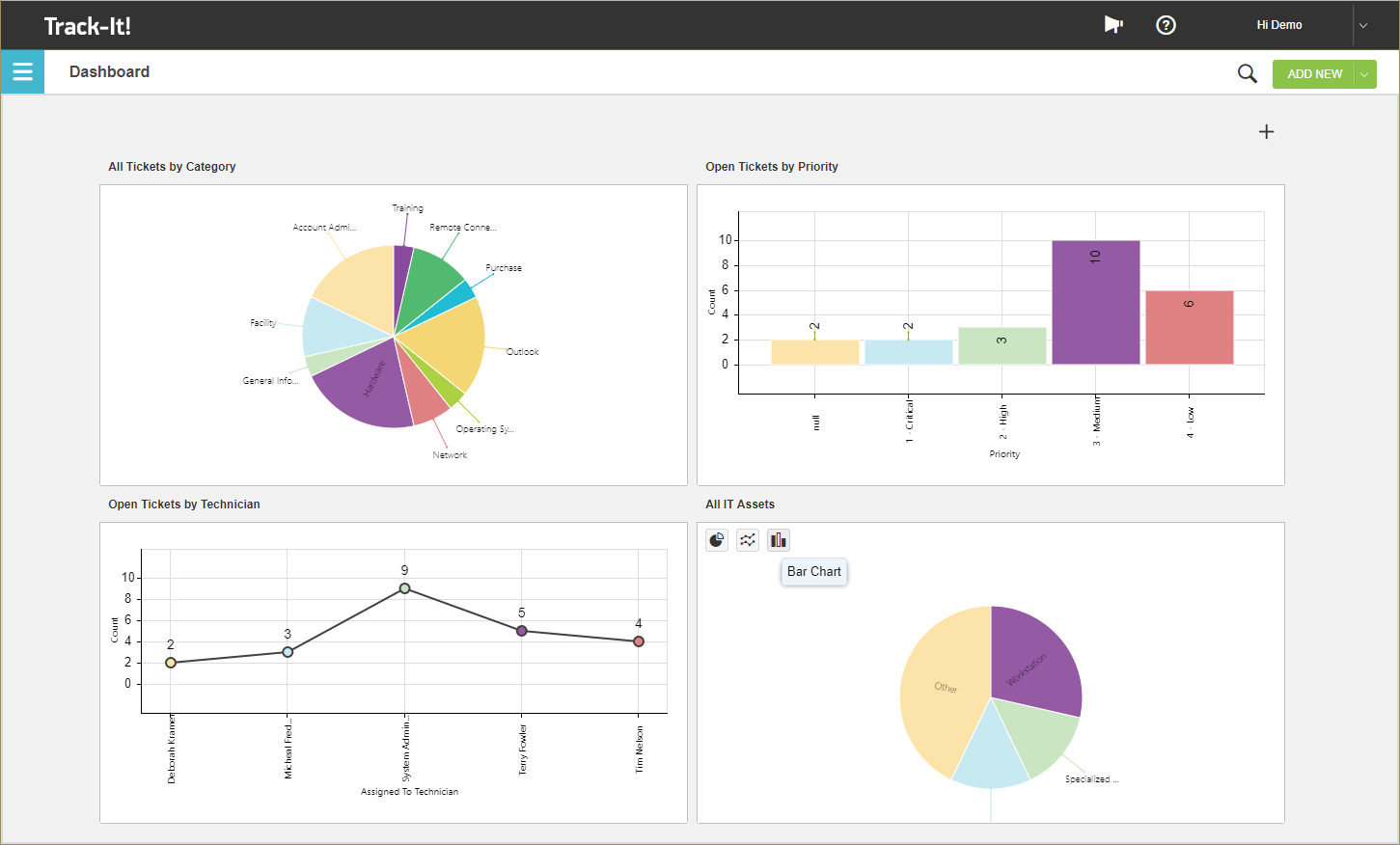
Have you ever seen when football players and coaches are on the sidelines looking at the printed still pictures of player formations and schemes?  It won’t be too long before they are using tablets and viewing archived and real time video footage.  This of course will allow for better decision making and course corrections.  IT will need that same level of information in which to respond and take action.  Executives and IT Managers will have immediate access on tablets and mobile devices with access to dashboards, SLA reporting and information sharing; these will be leveraged as key differentiators for organizations.  As we all know information and knowledge bring power. 

Regardless of what the future of technology brings, what ITIL version will be the flavor of the day, or even who will win this upcoming Super Bowl, IT’s focus around end-user satisfaction and customer service must not waiver.   The technology and tools that we use will still be the means to the end. 

That is really what it will come down to at the end of the game and how IT will ultimately be the winner.  


What do you see for IT in the year 2020?  Look forward to your comments or input. 

You can also reach me at david.manks@numarasoftware.com

Numara and BMC - A new beginning

Well.  That was a bit of surreal news, huh? Numara Software is being acquired by BMC Software.  As the Manager of the Track-It! team here at Numara, I have plenty of thoughts on how this will play out for my team, Track-It! customers and all of my colleagues here at Numara.  I can't really talk about a whole lot of things just yet as we're going to be integrating the two companies and making some decisions about different aspects of that integration very soon.  However, there are a few things that I would like to point out as we start this journey together.

First of all, Paul Avenant had some very kind words to say about us as a company - touching on our success in the market and the quality of the people and products here.  I personally appreciate his remarks and want to stress to our customers that he talked very pointedly about why BMC is acquiring Numara - because of our success in the SMB market.  We have worked hard for many years to carve out a space in this market and we welcome the chance to do so as part of BMC.  BMC is embracing the opportunities and potential new customers in the SMB market and we will be a huge part of helping them do that - by continuing to offer Track-It! and continuing to focus on our customers and their needs.  We would be nothing without our loyal customers who love Track-It! and we will never forget that.  Reaching out to customers to tailor future product work to their needs or to help them with challenges in their IT organization is one of my favorite things that I do every day.  This won't change.  If anything, as part of BMC we will have more of an opportunity to connect with customers and create a community around Track-It! that is second to none.  I look forward to working with my new colleagues at BMC to support our customers better than anyone else in the industry.  

Secondly, this is an extremely good pairing of two companies that compliment each other quite well.  On the smaller end of the SMB market, BMC will now have offerings in Track-It!, RemedyForce and many other products that can provide solutions for every customer.  As the organization size gets larger, Footprints, Remedy and other BMC product offerings come into the picture.  There should be not be an organization out there that needs to look anywhere else for their ITOM, ITAM or ITSM needs - we will cover the market with products that just fit.  And just work.  And offer quick initial integration times for our customers.  Zero to Help Desk or Service Desk in no time flat.  

Finally, we here at Numara are very excited to be joining BMC.  This is a win/win for both companies.  I've already started connecting with some people with BMC via different social media outlets and have found that the people that I have been able to touch base with have been extremely welcoming so far.  They have expressed their excitement about the deal and have been very sincere and complimentary toward us.  I have worked at both huge companies and tiny companies before.  Numara was a great-sized company but BMC will provide lots of opportunities for us - I look forward to being a part of it and the excitement is growing every day.  Our cultures seem to be extremely similar and our customers should know that our number one goal is to please them every single day.

A long time ago - more years ago than I'd like to admit - I had my first experience with BMC.  I went to Houston for two weeks of BMC Patrol training.  I actually left the day after I got engaged to my beautiful wife - she wasn't pleased with the timing of the trip all that much but there wasn't much I could do about that.  I remember being very impressed with their facilities, their people and their attitude.  They made a real impression on me and often times through the years I've referenced that trip and BMC in particular as being a great experience for me.  Now things are coming full circle for me.  

This will be a great thing.  For me.  For my team.  For our customers.  For you and your organization. 

This is going to be a lot of fun.

-- You can reach me at Benny.Morrison@NumaraSoftware.com or on Twitter (@BennyMorrison) or Google+ --

Does Apple want IT to Adapt or Die?

Interesting article here, relating to the challenges IT faces as Apple products march into the Enterprise.  

John Cox writes that, “One speaker, Kevin White, a principal at Macjutsu, which specializes in Apple training and consulting, during a panel discussion on Apple's iOS mobile platform pointed out that in iOS software "assets" -- apps -- belong to an iTunes account, not to any particular iOS device: these accounts are individual, not institutional. "It's a pain, but that's the [Apple] model," he told his audience, which neatly sums up what became an unintended theme of the entire MacIT conference.”

These comments really help to drive home that the next step of this mobile revolution is already well underway. IT is just getting a handle on the idea that Mobile Device Management (MDM) is an IT responsibility and now has to start thinking about Enterprise Mobile Application Management (MAM). This is huge as it relates directly to IT’s overall Software License Management and ITAM strategies. 

In the case of managing Apple devices, taking advantage of the Apple Volume Purchase VPP plan is going to be a must.  This is the closest to a global software entitlements management solution that is available in MDM/MAM. I have discussed this option with many of our customer’s and they all tend to agree that this is the best strategy to take in an effort to work around personal vs. corporate Apple ID issues that can arise from App deployment to iOS devices.

The article also makes note of some great tips from some of the Mac IT attendees who have already implemented VPP.

  • Under some federal income tax rules, “gifting” apps under VPP can be considered “compensation”
  • In signing up for VPP, you have to create a new VPP account even if you already have existing AppIds
  • Not all apps may be available via VPP, as the developers must opt into the Volume Purchasing Plan
If you are facing similar challenges, let us know in the comments below.

You can follow or contact Sam Elliott, the author of this post, on Twitter or Google+

The Game will be won in the Midfield

I recently came across a great post on the Harvard Business Review blogs called ‘How to Control the Middle of the Market.’

It argues that in soccer, controlling the midfield is critical to success. The team that controls midfield dictates the pace of play, gives its forwards and defenders more time to set up their plays and breaks up attacks by the opposing team's front line.

The same applies in American Football. This weekend’s Super Bowl will be won by the quarterback, either Eli Manning of the Giants or Tom Brady of the Patriots who controls the game, or the game will turn on a hit in midfield that causes a fumble and a game-winning touchdown.

As my blog points out, typically in business, it's not always fashionable to concentrate on the midfield. Analysts like to focus on the premium or Enterprise end of the market… and this is fine…there are plenty of customers who need this capability and functionality. This is specialist niche provider of premium-priced products tailored to a particular customer segment model. All valid. The mid  and SME markets require the 80/20 rule… *0% of the functionality with 20% of the complexity of ownership. Vendors have to organize for scale, using lower prices and volume purchasing to attract a mass market like Numara has already achieved as well as driving down your cost structure, which is actually good for the customer.

But now, just as in sport, the midfield is critical. It represents the middle of the market, to which one end of the market aspires to trade up and the other end of the market may have to (for economic reasons) or decide to (for lifestyle or pragmatic reasons) to trade down. In business, the most difficult trick of all is “straddling the pyramid” or “playing the piano”: serving both the people at the bottom of the pyramid and those at the top. The acknowledged specialists of this are consumer-goods giants such as P&G and Unilever. In Europe, BMW is a good example of a company that has segmented its products to appeal to a range of consumers. Although BMW says it has its sights set firmly on the premium sector of the international auto market through its three brands, BMW, Mini and Rolls-Royce, within each of those segments, there is still a ‘midfield’ product. For the BMW brand, it might be the BMW 5 Series, for example.

The Harvard Business Review article adds that a company controls midfield by fielding a complete product line that includes backs and forwards. It cites the example of the UK retailer Tesco,which significantly, doesn’t offer its products through one-size-fits-all supermarkets, but targets consumers through at least seven different store formats, from convenient Tesco Express outlets at one end of the spectrum to full assortment ‘Extra’ hypermarkets at the other.

So the midfield is a critical area, which is why BMC’s acquisition this week of Numara Software is such an important IT Operations Market development, for both BMC and Numara Software, and for our customers. As Forrester’s David Johnson’s excellent analysis makes clear, BMC has a golden opportunity through the Numara acquisition to bolster BMC's position in the small to mid-market space, with BMC's financial strength ensuring adequate support and on-going commitment to the Numara product line.

As BMC’s president Paul Avenant said, in IT management, one size does not fit all. The acquisition will create a broad portfolio of IT management solutions and services with unparalleled flexibility and choice for mid-sized organizations that typically have 500 to 5,000 employees. Mid-sized and small business organizations will benefit from new choices and more importantly, will have more capabilities to manage IT in support of the changing needs of their business.

BMC, which may be better known for its focus in the more complex enterprise segment, will certainly benefit from Numara’s expertise in the small to medium-size range, where, if you like, we control the midfield, but in turn, Numara will benefit from many of BMC's products or product knowledge that can be rendered or tuned for a min market audience.
 
We have a massive installed base of customers in the small and mid-market with our Track-It and Footprints product lines, and as David Johnson points out, we have indeed been hard at work rounding out our portfolio to include Client Management (software management, systems management, and OS management), and, particularly, our Cloud services, where our philosophy simply asks why buy a Cessna or a Lear Jet and fly it yourself if you can get on a Boeing 747 and book a scheduled flight.  It’s like trying to make TV programmes yourself when you can watch those, like the Super Bowl this weekend, provided by specialist networks that make them all the time and deliver specialist services for their customers. Remedyforce has been a powerhouse in this regard becoming the fastest growing SaaS IT service desk in the world! Its clear this is winning partnership.

Which brings me back to Sunday’s game. Both offenses are so potent that neither will want to make an error and leave the other with a golden opportunity from that key area, the midfield.

I’m taking the Giants by 3.

Extend Your IT Service Desk to Automate Human Resource Business Processes

A few weeks ago, I was invited to speak with the Chicagoland chapter of HDI at their monthly meeting.  As I scraped the wintery mix of snow & ice off the windshield of my rental car with no gloves on (of course I forgot to bring gloves to Chicago in January) my thoughts drifted from my talk on The Consumerization of IT to the fact that I couldn’t feel my finger tips, and I panicked.  How was I going to advance my slides during the talk if I got frost bite?  My defrosting fingers and I finally arrived at the event (on time, I might add) and I was pleasantly surprised to find such a great turnout on a cold, wintery day.  Confirmation of what I already knew to be true. HDI is a great organization, for those of us in the IT industry that provides education, networking and connection to our peers.  Our peers in IT who are most likely dealing with the same struggles we are. 

While consumerization means many new and different things for IT organizations, one of the most immediate impacts is the dramatic shift in user and business expectations.  We, as a general population, are more comfortable with technology than ever before.  With this increased comfort comes a new and bold expectation around performance speed, intuitiveness and accessibility.  Furthermore, many business units are asking, and sometimes even demanding, that IT offer, deliver and manage business processes and services that are far outside the realm of traditional IT work.   As a result, many IT organizations are faced with a new and complex challenge – how to manage day-to-day IT responsibilities while securely offering and delivering new business services.  As I discussed these concepts with the members of the Chicagoland HDI chapter, I found many folks in the room were currently facing this same trend within their own organizations. 

Here at Numara, we believe the answer to this challenge lies in your IT Service Management (ITSM) solution.  Most ITSM solutions are built to help you manage, route and automate IT processes.  So, why not extend the flexible process automation platform you already have and extend those capabilities to other functional areas of your business? 

Lending a hand to your Human Resources department is a great first step as this is an area that most likely already has defined processes already in place.  Leveraging flexible workflow automation, enforced approvals, a robust knowledgebase and the user self-service capabilities inherent to ITSM solutions, you can facilitate workflow and improve communication between distributed departments that often rely on information from Human Resources.

After my talk ended in Chicago, I spoke with the manager of IT Support at a large enterprise company with a tremendous amount of contractors.  She shared with me that their HR department has recently approached her IT group asking for help in managing the constant moves, adds and changes associated with contract staff.  She and her IT support staff have to figure out where this HR business project fits in their priority list while still delivering IT services and maintaining SLA adherence for the rest of the company. 

If your IT department is receiving similar requests, that being business units asking for your help, look to your IT Service Management vendor for help (shameless plug if you’re a Numara FootPrints customer, we can get you on the right path quickly and easily). ) And join Numara Software and Forrester Principal Analyst, Glenn O’Donnell, in mid-February when we will team up for a live discussion on trends in Business Process Automation.

In the mean time, what are the processes your business is asking you to help with?  Are you automating Human Resources business process already? Maybe some other functional area of the business is leveraging your ITSM solution to streamline workload and drive new business value.  Send me your success stories and challenges. I’d love to hear about them!

Relishing the Perfect Storm

We are at an interesting juncture in the delivery of IT for business needs. The development and impact of the Cloud, allied to consumerization and the need for effective asset and lifecycle management has created something of a developing Perfect Storm that has implications for the relationship between the business and IT, and the financial relationship between them.

IT financial asset management helps normalize expectations across the business. It helps people understand how much things truly cost because when you can look at past history and understand what the true cost of service was, it makes forecasting, planning and budgeting much more simple.

People have historically tracked acquisition costs and licenses and matched that to contracts. However what is more important and useful to the business is knowing the cost of that asset throughout its lifecycle. And the only way to achieve that is if the activities that happened to that asset during its lifecycle are also being tracked. If it is something that’s incidental, then that is part of your operations and by tracking that incident, you get better quality management information over time. For a Windows 7 migration, for example, it is not simply the cost of a Windows license and the hardware that should be recorded, but the cost of all the activities that go into that migration.

The problem with financial asset management is that in some companies it has yet to receive the priority listing it requires.

Now, take Cloud, another element of the Perfect Storm. It is a fundamental shift in what’s available to organizations and it gives them the freedom to make new service choices. New offerings for enterprises that weren’t available a few years ago are now opening up new doors, such as moving different applications or functions such as the corporate service desk or IT operations management toSaaS based delivery.

SaaS and Cloud based services can not only help reduce costs, but will also deliver more value. SaaS providers have the ability to scale more effectively, provide rapid release cycles and offer a better quality of service than can typically be achieved in house. Network links and VPNs typically just get in the way of the effectiveness of in-house applications, whereas Cloud-based applications open up the working environment so much more.

It’s like trying to get access to your applications through a door that’s open a tiny crack, instead of accessing it through a wide-open set of double doors. Why would you want to put your sales data in the sales force automation system behind a firewall so that it’s difficult for people out in the field to get to when they need it? For salesmen, or for remote service desk technicians, or suppliers, Cloud based applications like Salesforce.com have taught us that the usability that you have to present needs to be different because the way people interact with such applications –and their expectations from using them - are much different from an on-premise solution.

One of the areas that becomes immediately of interest to businesses that adopt Cloud-based IT Operations Management is what happens to charging structures within the organization.

Chargeback has always been of interest to companies, but now the advent of a more complex infrastructure that also involves devices owned by employees and not by the organization itself risks complicating the charging mechanism. There is no escape from consumerization, the latest and perhaps most unpredictable element in the approaching storm.

It all used to be relatively calm and simple. The organization bought its own PCs for its employees, and then ran its own systems. There may have been cross-charging, but it was mainly for internal accounting purposes. Charging and depreciation would have typically stretched from scarcely any chargeback other than the basic cost of the machine, to encompassing contribution charges to the cost of calls to and to the running of the Helpdesk, as well as a contribution to the cost of servers, networks and apps.

What these charging issues have provided is a wake-up call to the true value of the Cloud. There is no longer any vague assumption as with on-premise licensing as to which department or business unit is being charged what by whom. Or even whether there is any charging at all. Instead, the Cloud provides much needed cost- transparency and clarity across the business.

I believe one way of looking at the charging back of IT Services is to call it Software as a Service squared – or SaaS2.  If a vendor is providing Cloud based services to an IT department, then those services are similarly provided as a service to the business and can be charged back to the business units according to usage. In other words, if an IT department is being charged $100 for the provision of IT service or operations management in the Cloud, then it can follow a similar pattern and similarly cross-charge 100 customers each paying $1. The costs covers that of the PC hardware, the cost of the infrastructure – servers, software, maintenance - and the cost of the staffing of the service desk. What’s more, it can be seamlessly charged and allocated according to the company’s IT financial asset management systems.

The latest weather bulletin for some unready organizations is that the Perfect Storm has yet to fully hit us. Although the Cloud is (literally) gathering, consumerization is still developing in intensity, and some organizations’ IT financial asset management structures could best be described as squally.
The forecast, however, is that when the storm finally hits, it will be those organisations that have fully prepared for the impact of the Cloud, IT financial asset management, and consumerization that will be best placed to take advantage of the disruptive shift towards a new business and technology landscape, while their competitors are still battening down the hatches.

Mobile Web applications and off-line use - it's here...

I am a task management nerd.  I admit it.  I wasn't always this way, but several years ago I decided to take the step from fairly organized to overly organized.  I was primarily motivated by some conversations with my wife about things that needed to be done around the house or things that were part of some long-term projects for our family.  As we discussed the status for some of those items, I realized that I had a huge problem - I knew exactly where I stood on getting those things done, but my wife had no clue.  And how could she possibly have been able to figure it out?  My lists of tasks were complete but were scribbled on sheets of paper and I had the same problems then that many people do today.  I had no access to my tasks unless I was in my office at home, no way of easily conveying the status of various things to anyone else, re-organizing projects or even a list of tasks meant re-writing all of them on a different sheet of paper - the list of problems with my organization method was longer than my task list.

I started researching organization methods - Getting Things Done (GTD), Zen to Done (ZTD), Covey's methods.  I looked at a lot of them.  And quickly realized one thing - I believe that any one method works for one and only one person.  Period.  Even well-established methods like the ones listed here only exist because their creator refined them over time, put them down on paper and shared them with others.  People who follow them to the letter of the law might find - as I have - that deviating from those methods slightly to create your own personal management system works best for them.  I've taken elements of many different methods to form my own system and I continue to tweak mine as I learn more about myself and as I see different ideas from other systems and other people. 

One central tenet of any system is how you choose to store your tasks.  Hey - writing them on paper is perfectly fine.  Many people do that with great success.  However, I want mine stored electronically and I want them backed up regularly.  I shudder to think about the nightmare scenario of having hundreds of projects and tasks in a notebook and then losing that notebook or having it be destroyed somehow.  I've tried many different online task management systems and I also wrote my own system that I used for a long time.  All of them have their pros and cons when I look at them in the context of my management system - some have way more cons than pros, too.  Some people can't live without subtasks - I don't use them.  Some people use tags for everything and others just want a few fields that they can use to classify their tasks.  Some people use due dates for tasks and others think that practice is evil.  There are enough online tasks management web applications out there to suit everyone and their needs if they look hard enough.

One of my main requirements for my system is constant access.  I want to be able to see my tasks from any browser - especially from my mobile phone.  For the last several years this has meant having a native application on my phone that synchronized with a central repository to provide me access to my tasks.  The ability to add a task as quickly as possible wherever I am is paramount as is the ability to see what I need to work on and be reminded of it at any time.  Most of the time, there are many native applications available for any one web application and there rarely has been a clear-cut best-in-class choice for me - I've typically tried them all and chosen the one that had most of the features that I needed.

Now I'm seeing a new trend - one that we've predicted here at Numara for some time.  A number of online task management sites are rolling out HTML5 mobile web sites that work with the new HTML5 local storage APIs to provide full off-line capabilities for your tasks instead of providing a native mobile application.  With these HTML5 applications, typically when you first login to their site, you are asked if you want to allow synchronization of your data.  Once you agree, your data is downloaded into local storage in your browser.  The mobile web application then works with the data in the browser local storage and this data is synchronized with their site on some recurring basis.  This affords you the same ability provided by native applications - it allows you to work with your tasks when you don't have network access.  And the huge benefit is that this mobile web application works on all of the major mobile platforms - you don't have to write several different native applications to support all of your customers.

In my mind, the advantage to this model has always been around the platform and architecture of the application.  A native mobile application relies on a public API and, in the case of a third party application, that API may not provide all of the functionality that the full web site does.  A cloud-based, HTML5 application that is deployed alongside a full web site should have access to the same information and resources as the full site.  I actually have seen an instance where the mobile site for a particular product did not support certain functionality provided by the full site because it used their public API instead of another way of integrating with their site.  I immediately dismissed the site as a possibility for my use because of this - there's not much excuse for this approach.  Now, I'm not saying that a mobile web site should have every bit of functionality as the full product - actually, that's not the case at all.  A mobile web site should be carefully constructed to expose the key functions that a user would need to access on the go.  I've seen mobile web sites that were very difficult to use because they didn't adhere to this rule.  The point is that an HTML5 mobile site should be constructed so that it can provide any functionality that the user might want or need - that it shouldn't be limited by the architecture of the system.

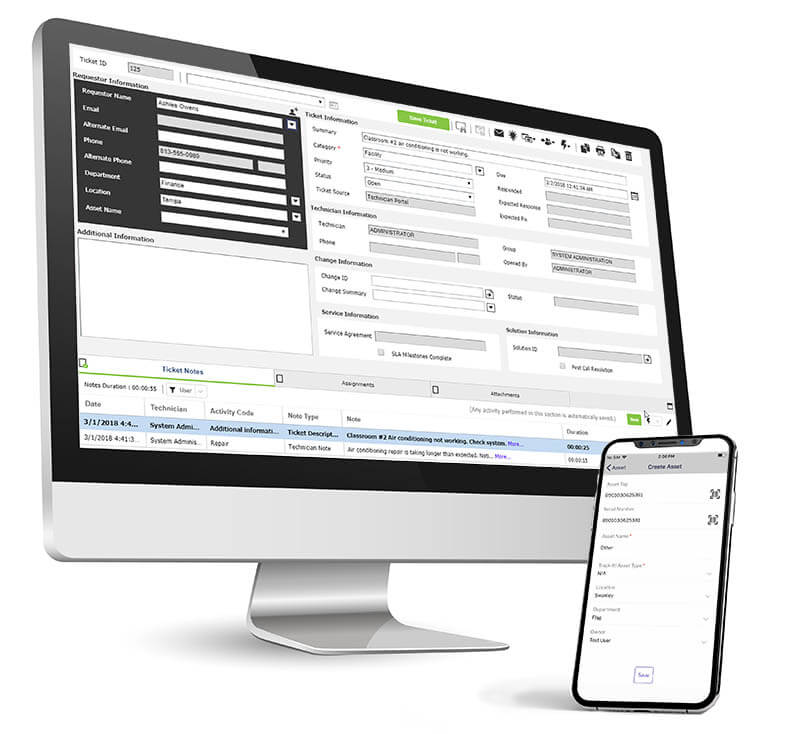
We designed Track-It! Mobile Web from the ground up to do just that - to expose the key functions that a Help Desk technician would need as they work on tickets every day.  We are looking at other functionality that could be included in our Mobile Web that customers and others have asked for.  From my standpoint, I'm thrilled because we are not limited in what we can put in the Mobile Web.  Sure, we have to rethink certain things - our users are in love with the grids in Track-It! and they are way too heavy to render in a mobile browser - but re-thinking them means that we are able to come up with solutions that work on a smaller form-factor device.  It certainly doesn't mean that we have to figure out how to provide the functionality in the product - just how it will look and feel as our customers use it.  And that's a beautiful thing.  We aren't wasting our time re-writing things so that they work in the mobile web.  Instead we're spending lots of time with customers and other internal resources figuring out exactly how our customers use the new mobile web and asking them what they think will make it work even better for them every day.

I'd like to know if our customers would like to see off-line support for Track-It! Mobile Web.  Do you think this would help you each day?  Do you find yourself without network access and needing to manage your Track-It! work queue often?  Do you think this would help you if your company has strict policies that cover whether or not you can access Track-It! Mobile Web from outside your firewall?

I'd love to hear your answers to these questions and any other thoughts you have on this topic.  Post a comment here - send me a tweet - post on the Track-It! Forums - whatever you want to do.  I'd love to hear from you!

-- You can reach me at Benny.Morrison@NumaraSoftware.com or on Twitter (@BennyMorrison) or Google+ --